Best AI Tools for Marketing 2026: 11 Picks for Small Teams
If you run marketing on a team of one to five people, you don't need another list of 30 tools organized by category. You need to know which of the best AI tools for marketing actually fit a small team — the ones that do real work without handing you a second job of stitching, editing, and babysitting.
Here's the short version: most AI marketing tools are single-point tools. A writer here, an SEO optimizer there, a scheduler somewhere else. Each one hands you a raw draft and leaves the coordination to a human who doesn't have the hours. This list ranks by fit for small teams, and it's honest about where each tool shines and where it leaves a gap.
How we ranked the best AI tools for marketing
We ranked by fit, not popularity. A tool with a million users can still be the wrong pick for a two-person team. Here's what we weighed:
- Fit for small teams — does it help a lean team do more, or does it assume you have a specialist to run it?
- Workflow coverage — does it cover the whole loop (research, write, optimize, publish) or one slice of it?
- Human control — is there a draft-and-approve step, or does it publish on its own?
- Learning curve — can a non-specialist get value in a day?
- Where it lives — does it fit into where your team already plans and works?
That last point matters more than people expect. A tool you have to remember to open is a tool you'll stop using by week three.

Quick comparison table
Lunroo leads the table because it's built for this exact reader — a small team that wants output without losing control. The rest are strong at what they do; they just cover less of the workflow.
| Tool | Best for | Type | Human approval step | Notion-native |
|---|---|---|---|---|
| Lunroo | Small teams wanting a full workflow | Multi-stage workflow | Yes (draft mode) | Yes |
| Jasper | Brand-voice writing at scale | AI writer | Manual | No |
| Surfer SEO | On-page SEO optimization | SEO tool | Manual | No |
| Copy.ai | Short-form and GTM copy | AI writer | Manual | No |
| Frase | SEO briefs and research | SEO / research | Manual | No |
| Outrank.so | Automated article publishing | SEO autopilot | Optional | No |
| SEObot | Hands-off article generation | SEO autopilot | Optional | No |
| Writesonic | All-purpose writing | AI writer | Manual | No |
| Byword | Bulk article generation | Bulk writer | Manual | No |
| Content at Scale | Long-form SEO drafts | Long-form writer | Manual | No |
| ChatGPT / Claude | Ad-hoc, flexible tasks | General LLM | Manual | No |
Competitor facts here are general and current as of 2026. We don't invent pricing — for Lunroo's plan, see current pricing.
1. Lunroo — best all-in-one AI marketing workflow for small teams
Most tools on this list are one worker. Lunroo runs the whole content and SEO workflow end to end on autopilot.
The stages are the point. Research covers keyword targets, SERP analysis, and the angle. Drafting writes in your brand voice. Editing tightens and optimizes the piece. Publishing ships it once you've approved it. Instead of you copying a keyword from one tab into a writer in another and then into an SEO checker in a third, each stage hands off to the next — which is the coordination a small team usually has to do by hand. We break down how that handoff works in how AI agents automate marketing and what AI marketing agents are.
You stay in control. Everything lands in draft mode for your approval — nothing publishes without a human sign-off. That's the difference between automation and abdication, and it's what makes an automated workflow safe for a small brand where every claim matters.
It's Notion-native, so planning, briefing, and approving happen where small teams already work. No new dashboard to remember. And it covers SEO research, on-page tuning, rank tracking, and analytics in one loop, rather than making you assemble a stack.
Two honest notes. Social media scheduling and email campaigns are on the roadmap — coming soon, not live today, so don't pick Lunroo for those yet. And there's no free tier; it's a paid subscription (see pricing).
Best for: a lean team that wants the whole content and SEO workflow handled with a human approval step. If that's you, start with Lunroo.
2. Jasper — brand-voice writing at scale
Jasper is one of the strongest AI writers for teams that care about tone. Its brand voice controls and templates make it easy to produce a lot of on-brand copy fast, and its marketing-focused platform has matured well beyond a blank prompt box.
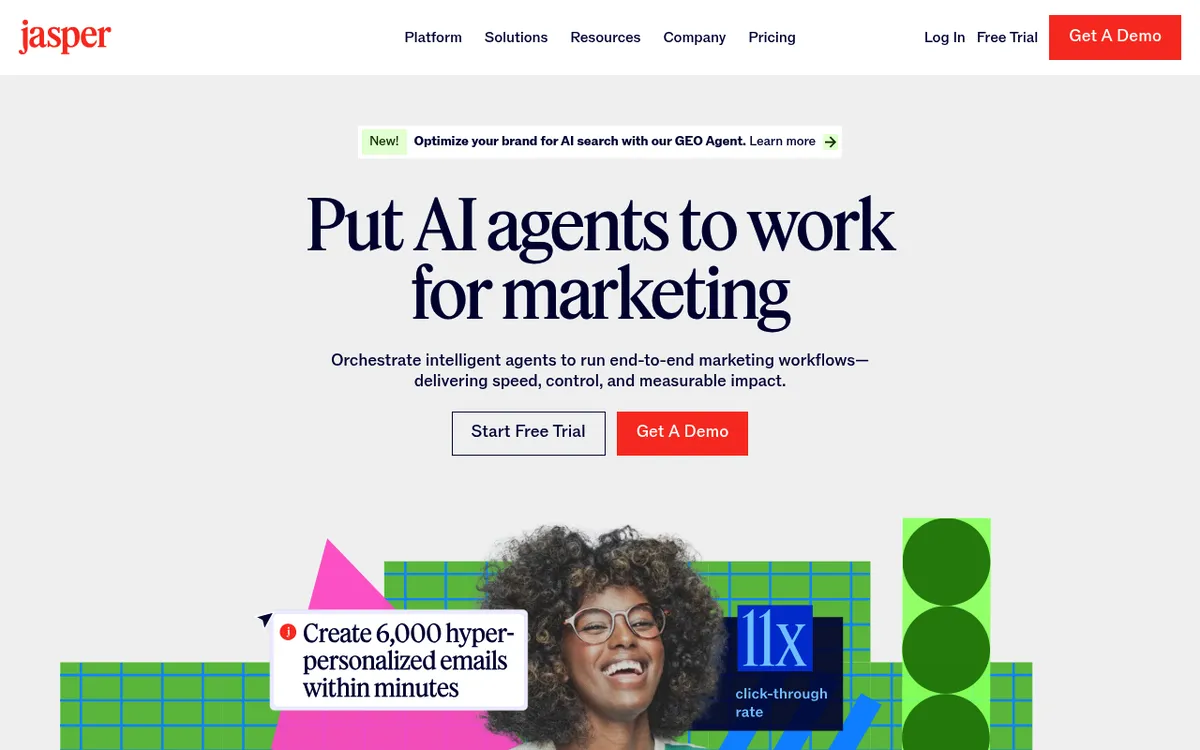
Best for: marketing teams that need high-volume, on-brand writing and have someone to direct it.
The gap for a small team: Jasper writes, but it doesn't research keywords, tune on-page SEO, or track rankings as one connected flow. You still own the workflow around it. If you're weighing it up, we cover the tradeoffs in our Jasper alternative breakdown.
3. Surfer SEO — on-page optimization
Surfer is excellent at one job: telling you how to structure a page to rank. Its content editor scores drafts against the SERP in real time and gives clear, actionable guidance.
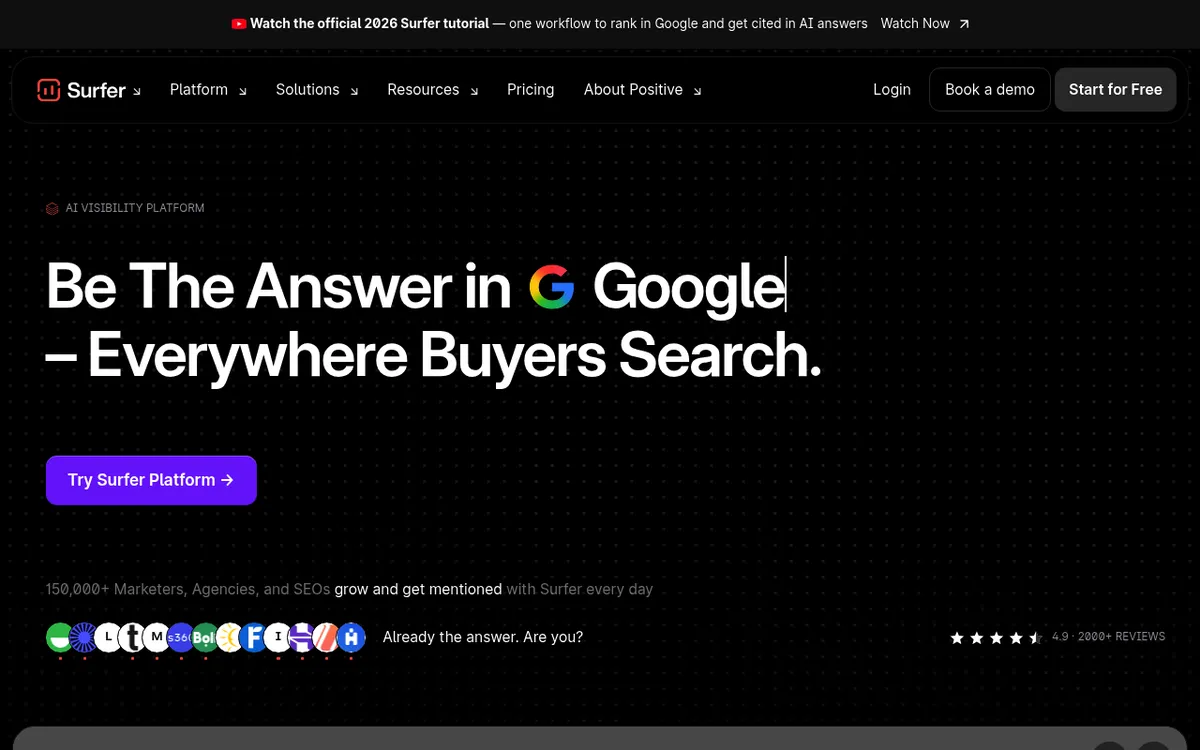
Best for: teams that already write and want data-driven on-page optimization.
The gap: Surfer optimizes; it doesn't research, draft the full piece, or publish. It's a specialist tool that assumes a writer is driving. For a small team, that's one more seat to fill. See where it fits in our Surfer SEO alternative comparison and our roundup of AI SEO tools.
4. Copy.ai — short-form and GTM copy
Copy.ai is fast and genuinely good at short-form: ad variations, email snippets, product descriptions, and go-to-market workflows. Its strength is speed and breadth of quick copy.
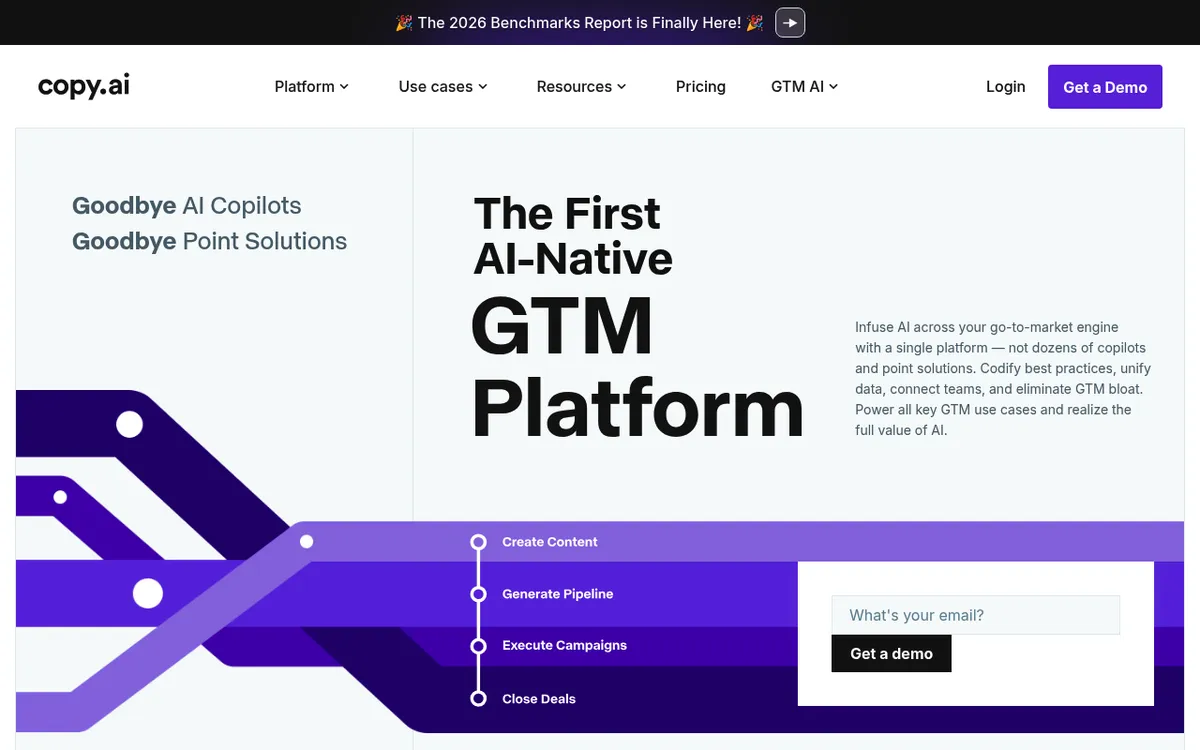
Best for: teams that need lots of short marketing copy and GTM assets.
The gap: it's built for snippets and workflows more than for a sustained SEO content engine. A small team publishing long-form regularly will still need research, optimization, and approval handled elsewhere.
5. Frase — SEO briefs and research
Frase shines at the research-and-brief stage. It pulls together SERP data into content briefs quickly, which saves real hours before you write.
Best for: content strategists building briefs and outlines from SERP research.
The gap: Frase gets you to a great brief, but drafting, editing, and publishing are still on you. For a small team, the brief is the easy part — it's the volume after it that hurts.
6. Outrank.so — automated publishing
Outrank does a great job turning keywords into published articles with minimal input. If you want an SEO article engine that runs mostly hands-off, it delivers.
Best for: teams that want automated, high-volume article publishing.
The gap: the more hands-off a tool is, the more it trades away control and brand-voice nuance. There's less of a natural approval step where a human shapes the piece. If you want automation with a firmer human-in-the-loop, compare notes in our Outrank alternative piece.
7. SEObot — hands-off article generation
SEObot is in the same family as Outrank: set it up and let it produce SEO articles on autopilot. It's genuinely low-effort to run.
Best for: founders who want SEO content shipping with almost no involvement.
The gap: "almost no involvement" is the selling point and the risk. Small brands usually want at least one set of human eyes before publishing, and fully automatic tools make that step optional rather than built-in.
8. Writesonic — all-purpose writing
Writesonic covers a wide range of writing tasks — blog posts, ads, landing copy — in one place. Its breadth is the draw.
Best for: teams wanting a flexible, general-purpose AI writer.
The gap: breadth without a coordinated workflow means you're still the one deciding what to write, optimizing it, and pushing it live. It's a capable writer, not a marketing team.
9. Byword — bulk article generation
Byword is built for volume. If your strategy is "publish a lot of SEO articles quickly," it produces them at scale efficiently.
Best for: programmatic or high-volume publishing plays.
The gap: raw volume can outrun quality control. A small team betting the brand on published content needs an editing and approval layer that bulk generators don't emphasize.
10. Content at Scale — long-form SEO drafts
Content at Scale focuses on producing long-form, SEO-aware drafts that need less editing than generic AI output. The first drafts are often solid starting points.
Best for: teams that want long-form drafts with SEO baked in.
The gap: it's still a drafting tool. Research direction, final optimization, rank tracking, and the publish decision live outside it — the coordination a small team is short on.
11. ChatGPT or Claude — the flexible generalist
A general-purpose LLM is the most flexible tool here, and honestly, every small team should keep one open for ad-hoc work: brainstorming, quick rewrites, summarizing research.
Best for: flexible, one-off tasks that don't need a repeatable pipeline.
The gap: it's a prompt box. It doesn't remember your brand voice across sessions, run a workflow, track rankings, or hand you approval-ready drafts on a schedule. It's a capable assistant, not a system — and it's why we never position an automated content workflow as "ChatGPT for marketing." They're different categories.
How to choose the right AI marketing tool for your team
Skip the feature checklists and answer three questions honestly.
-
Do you need one task done, or the whole workflow? If you just need on-page scores, Surfer is great. If you need research through publish handled together, a point tool leaves you assembling the pieces — that's where a multi-stage workflow earns its keep. Our content marketing workflow guide maps out what "the whole loop" actually includes.
-
How much human review time do you really have? Be honest. Fully automatic publishers save the most time but give you the least control. Draft-and-approve tools cost a few minutes per piece and keep your name safe on everything that ships. For a small brand, that trade is usually worth it.
-
Where does your team actually work? A tool that lives inside your planning system gets used. One that sits in yet another tab gets forgotten. If you plan in Notion, a Notion-native workflow removes a real point of friction.
Here's the pattern for most small teams: keep a general LLM for scrappy tasks, and put your repeatable content-and-SEO engine on something that coordinates the workflow with a human approval step. That's the case for AI agents running the whole pipeline over a drawer full of single-purpose tools.
If you'd rather have research, drafting, editing, and rank tracking run as one loop — with you approving every draft — try Lunroo or see the plan.
FAQ
Are AI marketing tools worth it for small teams?
Yes, when they replace hours you don't have. The value isn't "AI writes for free" — it's collapsing research, drafting, and optimization into a workflow one person can oversee. The best fit for a small team is a tool that covers more of the loop, so you're editing and approving rather than stitching outputs together by hand.
Can AI replace a marketer?
No, and you shouldn't want it to. AI is fast at volume — drafts, keyword research, on-page tuning — but a human should still set strategy, approve claims, and own the brand voice. The strongest setup is AI doing the repetitive work and a marketer making the calls. Tools with a draft-and-approve step are built around exactly that split.
What's the difference between an AI writer and an automated marketing workflow?
An AI writer is one worker: you prompt it, it drafts, and everything around that draft is your job. An automated marketing workflow runs distinct stages — research, drafting, editing, publishing — that hand off to each other and give you approval-ready drafts. The difference is coordination. A small team feels it most in the hours saved not moving work between tools. We explain it in more depth in what AI marketing agents are.
Do these AI marketing tools work with Notion?
Most don't natively — they run in their own dashboards, and you copy work in and out. Lunroo is Notion-native, so you plan, brief, and approve inside the workspace where small teams already work. If your team lives in Notion, that removes a real source of friction and dropped tasks.
Is there a free AI marketing tool or free tier?
Some general writers offer limited free plans, and general LLMs have free versions for ad-hoc use. Lunroo does not have a free tier — it's a paid subscription because it runs the full content pipeline and real SEO tooling per customer. You can see exactly what's included on the pricing page. If a permanent free tool is your hard requirement, a general LLM is the honest starting point.
How many AI marketing tools does a small team actually need?
Fewer than most stacks suggest. A general LLM for one-off tasks plus one system that runs your repeatable content-and-SEO workflow covers most small teams. Piling up single-purpose tools adds coordination work — the exact thing a lean team can't afford. Consolidate around the workflow, not the feature list.
Want the whole content-and-SEO loop handled on autopilot, with you approving every draft? Start with Lunroo, see how the workflow runs, or check current pricing.