What Are AI Marketing Agents? A Plain-English Guide for 2026
Here's the short version: AI marketing agents are autonomous programs that pursue a marketing goal on their own — planning the steps, using tools, checking their own work, and adjusting — instead of waiting for you to prompt every task. You set the objective; the agent figures out the work.
That's the real shift behind the buzzword. Most "AI marketing tools" are a smarter text box: you type, they answer, you copy-paste. An agent is closer to a teammate you brief once and check on later. Let's break this down into what agents actually are, how they differ from the AI tools you already know, what they do well, and where a human still has to sign off.
## What are AI marketing agents, exactly?An AI marketing agent is software that takes a goal — "grow organic signups from the blog" — and works backward into the tasks needed to get there. It plans a sequence, uses external tools (a CMS, an analytics API, a keyword database), evaluates the result, and loops until the job is done or it hits a point where it needs your call.
Three things separate an agent from a normal script or a chatbot:
- Autonomy — it decides the next step instead of running a fixed list.
- Tool use — it can research, publish, and pull data, not just generate text.
- Judgment — it reacts to what's working and changes course.
A scheduled automation posts whatever you queued. An AI agent decides what to post, when, and why, based on the signal it sees. That's the line between marketing automation and autonomous agents.
How AI marketing agents differ from AI marketing tools
This is the distinction that trips people up, so it's worth being precise. AI marketing tools and AI marketing agents overlap, but they solve different problems.
| AI marketing tools | AI marketing agents | |
|---|---|---|
| Unit of work | One prompt, one output | One goal, many steps |
| Who drives | You, task by task | The agent, against your objective |
| Tools & data | Usually text in, text out | Research, publish, and analyze via connected tools |
| Coordination | You stitch outputs together | Agents hand work to each other |
| Runs continuously | No — you re-open it each time | Yes — it works between check-ins |
A tool like a standalone AI writer is genuinely useful. It just leaves the coordination — briefing, editing, optimizing, publishing, tracking — to a human who runs out of hours. An agent, or a team of them, owns that coordination. If you want the fuller breakdown, we compared the leading options in our guide to the best AI tools for marketing.
It's also why "ChatGPT for marketing" undersells the category. A general chatbot answers one question at a time. An agent stack is goal-driven: it plans multi-step work, uses tools, and keeps going without you re-prompting.
The types of AI marketing agents
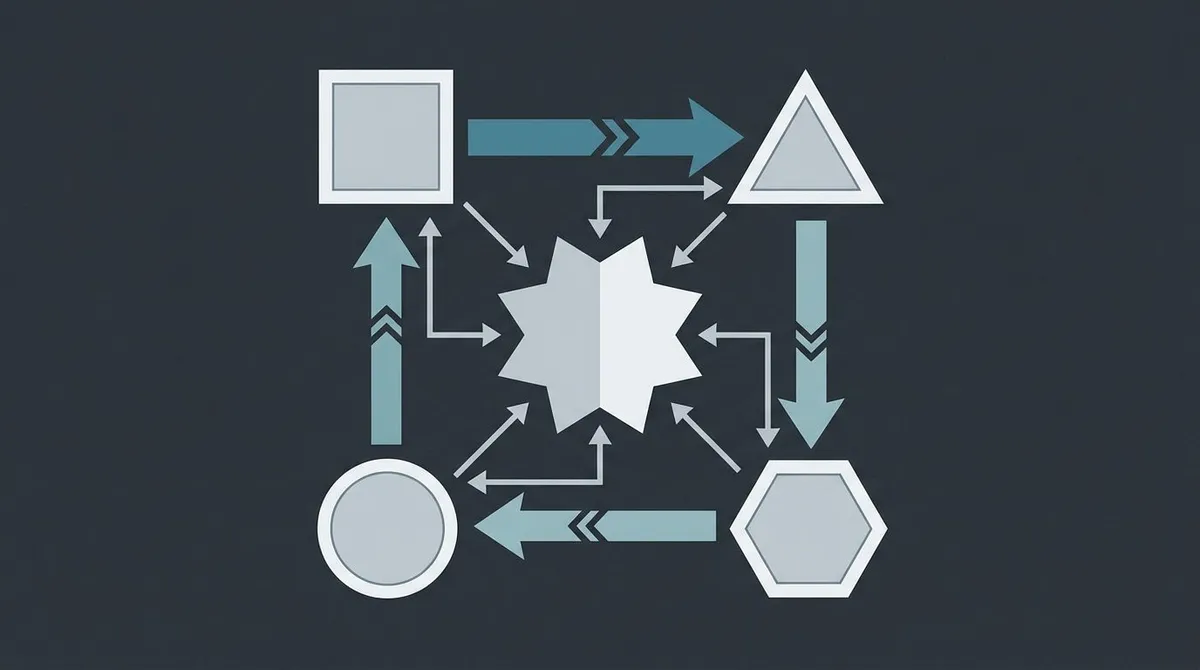
Most of the day-to-day marketing motion maps onto a handful of specialized agents. Instead of one do-everything bot, a coordinated team splits the work the way a real marketing department does — each agent owns a lane and hands off to the next.
| Agent role | What it owns | Human checkpoint |
|---|---|---|
| Researcher | Keyword and topic research, competitor gaps, audience signal | Approve targets |
| Writer | Drafts posts, landing pages, ad copy in your brand voice | Approve tone & claims |
| Editor / SEO | On-page optimization, internal links, fact and quality checks | Approve before publish |
| Project manager | Sequences the work, tracks status, surfaces the next action | Set strategy & priorities |
At Lunroo we run exactly this shape, as distinct stages rather than roles — research, drafting, editing, then publishing, with a human approval step in between. The point isn't how you slice it. It's that the stages hand off automatically, so no single prompt has to hold the entire workflow in its head.
How AI marketing agents actually work
Under the hood, a marketing agent runs a loop that looks a lot like how a good marketer thinks:
- Understand the goal. You give it an objective and constraints — audience, brand voice, what "good" looks like.
- Plan the steps. It breaks the goal into tasks: research this keyword, draft that page, optimize, schedule.
- Use tools. It pulls keyword volume, reads what already ranks, drafts, checks for plagiarism, and formats for publishing.
- Check its own work. It evaluates the output against the goal — did the draft cover the intent, hit the structure, match the voice?
- Adjust and continue. If something's off, it revises. If it's uncertain, it escalates to you.
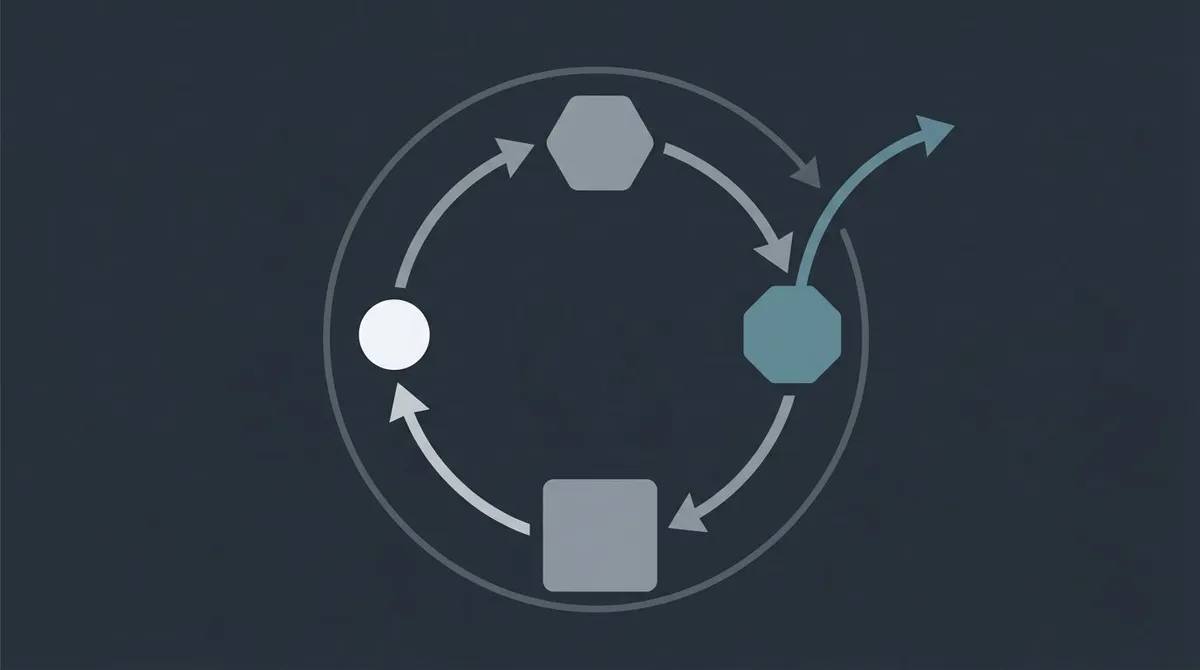
The magic isn't any single step — it's that the loop runs continuously. The best SEO and content work is boring and repetitive, which is exactly why handing it to an agent pays off. It never gets bored, and it doesn't skip the unglamorous parts. If you want to see this applied end to end, our post on how AI agents automate marketing walks through the full stack.
What AI marketing agents do well (and what they don't)
Being honest about the tradeoffs is the whole point — overhyping AI is how teams end up disappointed. Here's where agents earn their keep and where they don't.
They're strong at:
- Volume with consistency. Publishing weekly, optimizing every page, keeping briefs and drafts in sync — content automation is repetitive by nature, and agents don't tire.
- Research and structure. Pulling the outline from what ranks and filling gaps competitors missed, so you review a real draft, not a blank page.
- The boring SEO layer. Automating SEO work — metadata, internal links, rank tracking — runs better as a continuous background process than a monthly scramble. Our roundup of AI SEO tools covers where this fits.
They still need a human for:
- Taste and brand judgment. An agent can match a voice; it can't decide what your brand should stand for.
- Sensitive claims. Anything legal, medical, financial, or reputational needs a person to verify before it ships.
- Original point of view. Agents synthesize what exists. The genuinely new angle usually starts with you.
Google's own guidance is a useful north star here: it rewards helpful, people-first content regardless of how it's produced, and penalizes content made mainly to game rankings. Agents help you produce more of the good kind — but the "helpful" part still depends on human strategy.
Where humans stay in the loop
Automation without oversight is how brands end up apologizing. A well-designed agent system keeps you in control at three points, so this feels like leverage, not abdication:
- Strategy — you set goals, audience, and priorities. Agents execute against them.
- Approval — draft-and-approve mode means nothing publishes without your click. The agents prepare the work; you sign off.
- Escalation — when an agent is uncertain about a claim or a decision, it asks instead of guessing.
You make the calls that need accountability. The agents do the volume. That balance — automation you actually trust — is what separates a useful agent stack from a firehose of AI slop. It's also why a repeatable content strategy matters more, not less, once agents enter the picture: they execute your plan faithfully, so the plan has to be good.
How to start using AI marketing agents
You don't need to automate everything on day one. A sensible rollout looks like this:
- Pick one goal. Usually organic growth from content — it's measurable and compounding.
- Turn on one agent in draft mode. Content or SEO is the natural first step.
- Review for a week. Correct its voice and targets so it learns what "good" means for you.
- Graduate to publishing. Once you trust the output, let it ship, then add the next agent.
Momentum compounds. Two months in, the agents have learned your voice, your best topics, and your conversion patterns, and the stack starts to feel like a teammate rather than a tool.
If you'd rather have an automated content workflow run this loop for you — research to draft to optimize to publish, right inside your Notion workspace — that's what Lunroo is built to do. It's one subscription in place of a writer, an SEO retainer, and a stack of point tools; you can see current pricing for what's included. Either way, the honest takeaway is the same: agents give you leverage, and you keep the wheel.
FAQ
What are AI marketing agents in simple terms?
AI marketing agents are autonomous programs that take a marketing goal and do the work to reach it — planning tasks, researching, drafting, optimizing, and publishing — without you prompting each step. Think of them less like a text box and more like a teammate you brief once and review later.
How are AI marketing agents different from tools like ChatGPT?
ChatGPT is a general assistant you drive one prompt at a time. An AI marketing agent is goal-driven: it plans multi-step work, uses tools like a CMS or keyword database, coordinates with other agents, and keeps running between your check-ins. The difference is autonomy and tool use, not just better writing.
Do AI marketing agents replace marketers?
No. They replace the repetitive execution — drafting, optimizing, tracking, keeping things in sync. Strategy, taste, brand judgment, and original point of view stay human. In practice, a small team with an agent stack ships like a much larger one, because the humans spend their time on decisions instead of busywork.
Can I review the work before it goes live?
Yes, and you should. A good agent system runs in draft-and-approve mode, where agents prepare the work and wait for your sign-off. You can graduate individual agents to auto-publish once you trust their output, but the default keeps a human in the loop for anything sensitive.
What can AI marketing agents actually do today?
Reliably: content research and drafting, on-page SEO, internal linking, rank tracking, and keeping a content pipeline moving. Some capabilities — like social scheduling and email campaigns — are still emerging across the category and are worth confirming before you rely on them. Start with content and SEO, where agents are most proven, and expand from there.
How do I get started with AI marketing agents?
Pick one measurable goal, turn on a single agent in draft mode, and review its output for a week to correct its voice and targets. Once you trust it, let it publish and add the next agent. Starting narrow beats trying to automate your whole marketing stack overnight.