Content Automation: A Guide for Small Marketing Teams
If you run marketing on a team of one to five people, you already know the math doesn't work. The publishing calendar wants three posts a week; you have time for one. That gap is exactly what content automation is supposed to close — but most of what gets sold under that label is a single AI writer that dumps unedited drafts and calls it a day.
Here's the short version: content automation done well means automating the repetitive parts of the content lifecycle while keeping a human on the decisions that matter. This guide covers what to automate first, what to keep human, and how to build a workflow that scales without wrecking your quality.
What content automation actually means in 2026
Content automation is the practice of using software and AI to handle the repeatable steps in producing content — research, briefs, drafting, editing, SEO optimization, publishing, and tracking — so your team spends its time on strategy and judgment instead of busywork.
It is not one-click article spam. The version that gives automation a bad name is a prompt box that turns a keyword into a 1,500-word draft nobody reviewed. That produces volume, not results.
The useful definition covers the whole pipeline, not a single step:
- Research — finding topics, keywords, and what's already ranking
- Briefs — turning a topic into an outline with intent, structure, and target terms
- Drafting — writing a first version grounded in that research
- Editing — fact-checking, tightening, and matching brand voice
- Optimization — on-page SEO, internal links, metadata
- Publishing and tracking — shipping the piece and watching how it performs
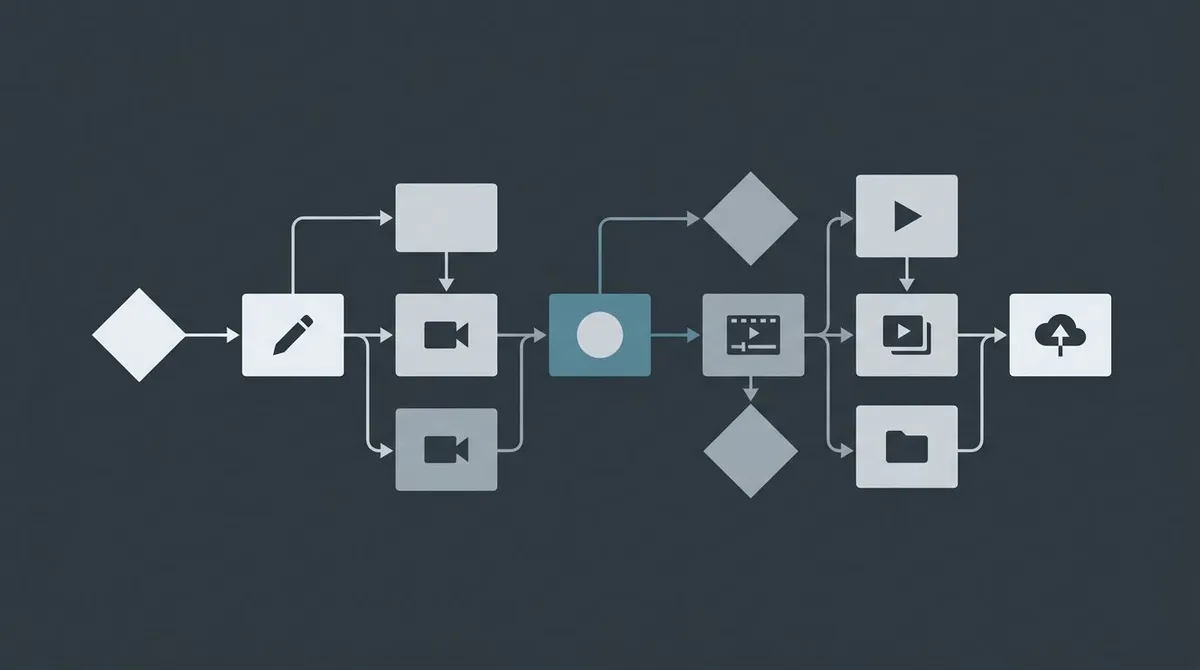
Automating one of these in isolation rarely moves the needle. Automating the connections between them is where small teams get real leverage. If you're rethinking the whole process, our content marketing workflow guide walks through the pipeline end to end.
What small teams should automate first (and what to keep human)
Not everything should be automated, and the line matters more than the tools. The good news is the split is fairly predictable.
Automate the repeatable, high-volume work:
- Topic and keyword research — pulling volume, difficulty, and related terms is mechanical. Let a tool do it. Our guide on how to do keyword research covers the process if you're starting from scratch.
- Content briefs — turning a target keyword into a structured outline is a great fit for automation.
- First drafts — a research-grounded first draft saves hours, as long as it isn't the final draft.
- On-page SEO — headings, metadata, internal links, and keyword placement follow rules a machine can apply consistently.
- Rank tracking and reporting — checking positions weekly is pure repetition. Automate it completely.
Keep these human:
- Strategy — which topics, which audience, which business goal. No tool should decide what you publish and why.
- Brand voice sign-off — AI can match a voice; a person should confirm it landed.
- Claims and facts — anything a reader could act on, or that could embarrass you, needs a human check.
- Final approval — nothing ships without a person saying yes.
The pattern: automate the production, keep humans on the judgment. A small team that gets this split right can publish three or four times more without hiring, because the hours go to review instead of blank-page drafting.
The hidden cost of "one AI writer" automation
Single-tool AI writers are genuinely fast. Paste a keyword, get a draft in ninety seconds. For a stretched team, that speed is tempting, and it's a real strength worth acknowledging.
The cost shows up later. A lone AI writer with no research step invents statistics, misreads search intent, and produces the same generic structure every competitor's tool produces. You end up rewriting more than you would have written from scratch — which means the automation cost you time, not saved it.
The deeper problem is that "one AI writer" collapses four different jobs into one. Research, writing, editing, and coordination are distinct skills. When a single model does all of them in one pass, there's no second set of eyes catching what the first one missed. The draft is confident and wrong, and nobody flagged it.
Automated content creation only pays off when the pipeline has structure: grounded research feeding the draft, a distinct edit pass, and a human approving the result. Skip those and you've automated the production of work you can't publish. If you're weighing options, our roundup of the best content writing tools compares approaches honestly.
Building a content automation workflow that scales
Here's a workflow that holds up as you grow. Treat each step as a handoff, not a single button.
- Topic research — identify a keyword or question worth targeting, with real search demand and a realistic difficulty for your domain.
- Brief — turn it into an outline: search intent, H2 structure, target and related keywords, internal links to include.
- Draft — write a first version grounded in the brief and research, not just the keyword.
- Edit — fact-check, tighten, match brand voice, verify every claim.
- Human approval — a person reviews and signs off. This is the gate, not a formality.
- Publish — ship it, with metadata and internal links in place.
- Track — watch rankings and traffic so the next brief learns from the last piece.
Pro tip: don't automate all seven steps for every format at once. Pick one content type — say, SEO blog posts — and run it through this loop for four to six weeks. Get the quality and the review rhythm right, then expand to a second format. Teams that automate everything on day one usually end up trusting none of it.
The content marketing automation that scales is boring on purpose: the same repeatable loop, running every week, with a human checkpoint that never moves. For a deeper look at how autonomous agents run this end to end, see [how AI agents automate marketing](/blog/how-ai-agents-automate-marketing).Why a multi-stage workflow beats a single tool
The gap between "one AI writer" and a workflow that actually publishes is coordination. That's the idea behind running content automation as a sequence of distinct stages instead of one generalist pass.
At Lunroo, the content pipeline is split into stages that mirror how a real content team works:
- Research — keyword targets, SERP analysis, and the angle worth taking.
- Drafting — the piece itself, grounded in that research.
- Editing — fact-checking, tightening, matching your brand voice.
- Publishing — the draft goes live once you approve it, and the pipeline keeps moving.
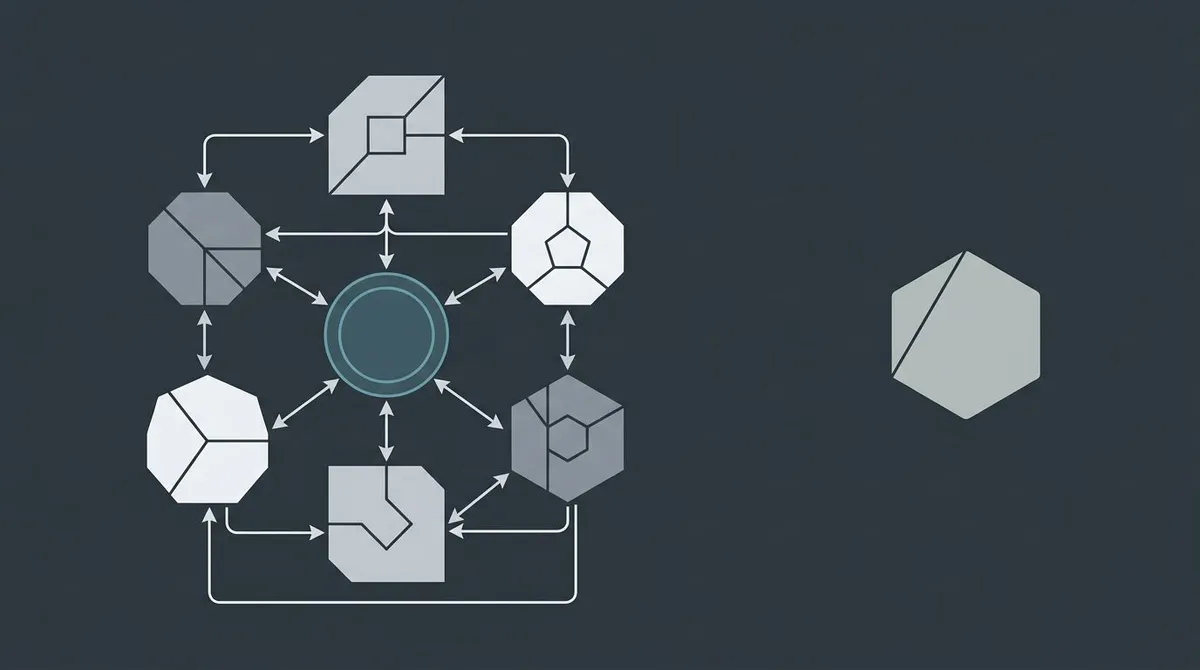
Stage separation matters for the same reason it matters with people: the researcher, the writer, and the editor catch different things. A draft that passed through distinct research, writing, and editing steps is closer to publishable than one model's single pass, because each stage had a narrower job and did it better.
It also runs Notion-native, which is the part generic tool stacks can't match. Your briefs, drafts, and calendar live in the workspace your team already plans in — no new dashboard to babysit. That's a practical difference for a small team: automation that fits the workflow you have, rather than one more app to check.
Keeping humans in the loop: draft mode and approval
This is the part most content automation guides skip, and it's the one that actually makes automation safe. Human-in-the-loop isn't a limitation on automation — it's what makes automation publishable.
The model is simple: the automation does the volume, a person approves the result. Every draft lands in draft mode. You read it, edit if needed, and approve — or send it back. Nothing goes live on its own.
Why this matters for a small team:
- You stay accountable for what ships. Your name is on the blog. A human checkpoint means no fabricated stat or off-voice paragraph slips through.
- The system learns from your edits. When you fix something, that's a signal for next time. Approval isn't just a gate; it's feedback.
- You get speed without abdication. Automation handles the hours of drafting; you keep the thirty seconds of judgment that protect your brand.
Draft-and-approve is the difference between automation as leverage and automation as a liability. A tool that publishes without you is a risk; a tool that drafts for you and waits for your yes is a teammate.
How to measure whether content automation is working
Automation is worth keeping only if the numbers move. Track these before you scale, so you're expanding something that works rather than multiplying something that doesn't.
- Velocity — how many pieces you ship per week or month. This should rise first; it's the most direct effect of automation.
- Edit rate — how heavily you rewrite each draft before approving. A high edit rate means the automation isn't grounded well enough; a falling edit rate means it's learning your standards.
- Rankings — are the automated pieces actually ranking? Track target keywords over weeks, not days. Our guide on how to rank on Google covers what to expect.
- Organic traffic — the outcome that matters. Content velocity is worthless if it doesn't compound into traffic.
Watch velocity and edit rate together. Rising velocity with a low, stable edit rate is the signal that your workflow is healthy. Rising velocity with a climbing edit rate means you're publishing faster than you're improving — fix the pipeline before you add formats. Google's own helpful content guidance is a good yardstick for whether what you're shipping deserves to rank.
If you'd rather have the whole content pipeline run this loop on autopilot — research, draft, edit, and hand you a draft to approve, right inside Notion — see how Lunroo works. It's built for exactly the small-team problem this guide started with: publish more, without losing control of what goes out.
FAQ
Is content automation the same as AI content generation?
No. AI content generation is one step — producing a draft. Content automation is the whole lifecycle: research, briefs, drafting, editing, optimization, publishing, and tracking. Generation is a component of automation, not a synonym for it.
A tool that only generates drafts leaves you doing everything else by hand. Real automation connects the steps so the output of research feeds the draft, and the draft flows into review and publishing.
Will automated content rank on Google?
It can, if it's genuinely useful and reviewed. Google doesn't penalize content for being AI-assisted; it rewards content that helps people and demotes low-effort, unhelpful pages regardless of how they were made.
The deciding factor is whether the piece is grounded, accurate, and worth reading. Automated content that skips research and review tends to be generic, and generic content struggles to rank. Automated content that runs through a real edit-and-approve step competes fine.
Does content automation replace writers or editors?
It changes what they spend time on rather than replacing them. Automation handles the repetitive production — first drafts, keyword research, metadata — so writers and editors focus on strategy, voice, and judgment.
On a small team, this usually means the same people publish more, not that anyone gets cut. The human role shifts from typing every word to directing and approving the work.
What can small teams realistically automate today?
Research, briefs, first drafts, on-page SEO, and rank tracking are all reliable to automate now. Those are rule-based or repetitive enough that automation handles them well.
Keep strategy, brand voice sign-off, fact-checking, and final approval human. A practical starting point is automating one content format end to end for a few weeks, then expanding once the quality holds.
Is content automation worth it for a two-person team?
For a two-person team, it's often where automation matters most — you have the least time and the most to gain from leverage. The goal isn't to replace either person; it's to let two people produce like four.
The value is relative: one coordinated system instead of a freelance writer, an SEO retainer, and a stack of separate tools. You can see current plan details on the pricing page, but the deciding question is simpler — does it let a small team ship consistently without burning out? For most, that's a yes.