How to Rank on Google: A Step-by-Step Founder Guide
Here's the short version of how to rank on Google: pick a keyword you can realistically win, write the most genuinely helpful page for that search, make it easy for Google to crawl and understand, earn a few good links, then track and iterate. That's the whole game. The hard part is doing it consistently while you're also building a product.
This guide is written for founders and indie hackers who own a small site or SaaS and want organic traffic without hiring an SEO team. No fluff, no "17 magic tricks" — just the process that works, plus honest expectations. Ranking takes months, not days. And with AI Overviews reshaping the results page, the sites that win are the ones that answer the question better than anyone else.
## How to rank on Google: how ranking actually worksBefore you chase tactics, you need a mental model. Google does three things: it crawls the web (follows links to discover pages), indexes what it finds (stores and understands each page), and ranks those pages when someone searches. If any step breaks, you don't rank — a page that isn't indexed can't appear at all.
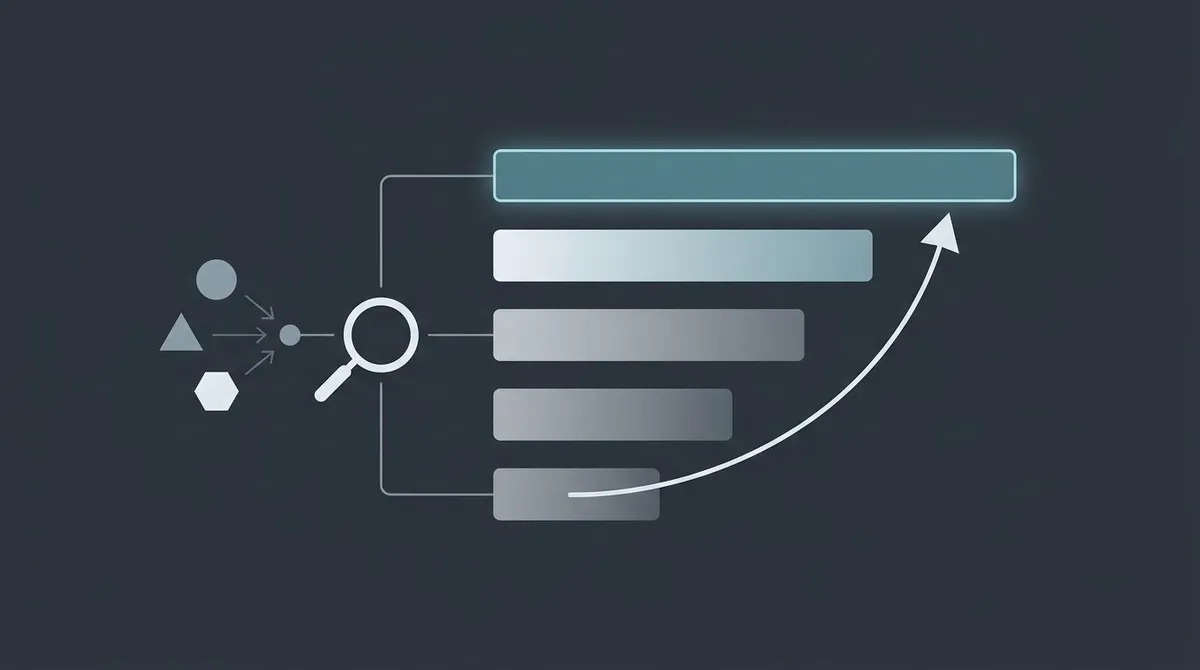
The google ranking algorithm weighs hundreds of signals, but they cluster into a few things you can actually influence: relevance to the query, content quality, links from other sites, and a usable page experience. Google summarizes the quality side as E-E-A-T — experience, expertise, authoritativeness, and trust. You don't earn E-E-A-T with a checklist; you earn it by being the person who actually knows the topic and shows it.
One shift you can't ignore in 2026: AI Overviews now sit at the top of many searches, answering the question directly. That means fewer clicks on some informational queries, and more reward for pages that are clearly structured, specific, and genuinely useful. The old game of thin, keyword-stuffed pages is over. Write for a human who needs an answer, and structure it so a machine can extract that answer cleanly.
Set expectations now: a brand-new site rarely ranks for competitive terms in weeks. Give it three to six months of consistent work before you judge results.
Step 1: Find keywords you can realistically rank for
The most common founder mistake is targeting terms that are too big. "Project management software" has huge volume and is owned by companies with thousands of backlinks. You will not win it this year. That's fine — you don't need it.
Instead, chase long-tail keywords: specific, lower-volume phrases with clear intent and weaker competition. "How to rank website on google first page" is far more winnable than "SEO," and the person searching it knows exactly what they want. Ten long-tail pages that each rank can outperform one head term you never crack.
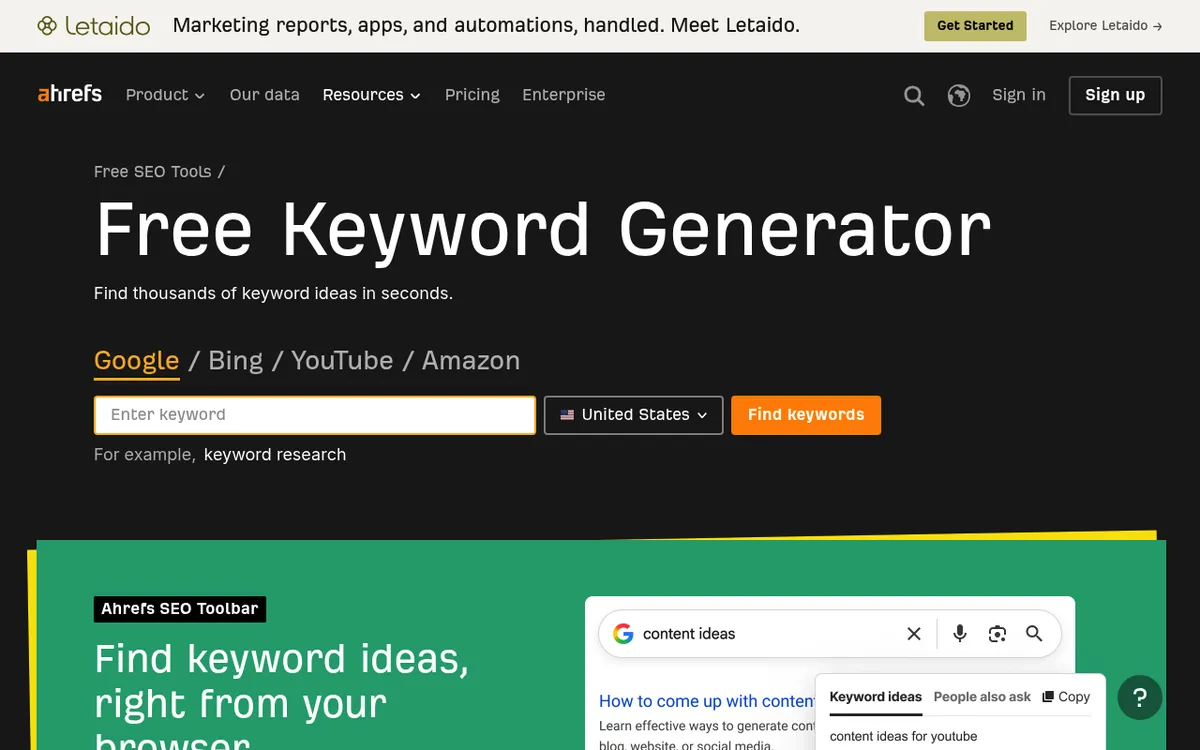
Judge each keyword on three things:
- Search volume — enough people search it to matter, even if it's only 50–300 a month.
- Difficulty — how strong the pages already ranking are (a low keyword-difficulty score means you have a shot).
- Intent — what the searcher actually wants. Match it or you won't rank no matter how good the page is.
For a small site, weight difficulty heavily. Volume is worthless if you can't reach page one. A cluster of low-difficulty, high-intent keywords is the fastest path to your first rankings — and if you want the full method, our guide on how to do keyword research walks through it step by step.
Step 2: Match search intent and create genuinely helpful content
Once you have a keyword, look at what already ranks for it. Are the top results how-to guides, comparison pages, or product pages? That tells you the intent Google has decided to reward. If everyone ranking is a tutorial and you publish a sales page, you've lost before you start.
Then beat those pages — not by word count, but by usefulness. Answer the question more completely, more clearly, and with more real detail than the competition. If the searcher would have follow-up questions, answer those too. Depth signals to Google (and to AI Overviews) that your page fully covers the topic.
Structure matters as much as substance:
- Put the direct answer near the top, then expand.
- Use descriptive H2s and H3s so the page scans in five seconds.
- Break dense ideas into lists and short paragraphs.
- Add specifics — numbers, examples, screenshots of your own process — that a generic AI draft can't fake.
This is where a lot of founders quietly stall: they know the topic but not how to shape it into a page that ranks. Our how to write SEO content guide covers the writing mechanics, and if you're building a broader publishing plan, start with how to build a content strategy.
Step 3: Nail on-page SEO
On-page SEO is how you tell Google what a page is about. None of it is complicated, and skipping it leaves easy rankings on the table. Here's what actually moves the needle:
- Title tag — include your target keyword, keep it under ~60 characters, and write it to earn a click, not just to match the query.
- Meta description — it doesn't directly affect rankings, but a compelling one lifts your click-through rate, which does matter.
- One H1 per page — usually your headline, containing the keyword naturally.
- Logical heading structure — H2s and H3s that mirror how a reader would break the topic down.
- Internal links — link to and from your other relevant pages using descriptive anchor text.
Internal linking is the most underused lever for founders. Every time you link between related posts, you pass authority and help Google understand how your site fits together. A page with zero internal links pointing to it is a page Google half-ignores.
Add basic schema markup where it fits — an FAQ block, an article type, a how-to. It won't rank you on its own, but structured data helps Google (and AI Overviews) extract your content, which is exactly what you want in 2026.
Step 4: Fix the technical foundation
Technical SEO sounds intimidating, but for a small site the checklist is short. You mostly need to make sure Google can find, crawl, and render your pages without friction.
Start in Google Search Console — it's free and non-negotiable. Verify your site, submit an XML sitemap, and use the URL Inspection tool to confirm your key pages are actually indexed. If a page you care about isn't in the index, nothing else in this guide matters for it.
Then cover the fundamentals that Google's own SEO Starter Guide emphasizes:
- Mobile-friendly — Google indexes the mobile version of your site first.
- Fast enough — Core Web Vitals measure loading, interactivity, and visual stability. You don't need a perfect score; you need to not be painfully slow.
-
Crawlable — no accidental
noindextags or robots.txt rules blocking pages you want ranked. - Clean URLs — readable, keyword-relevant, and consistent.
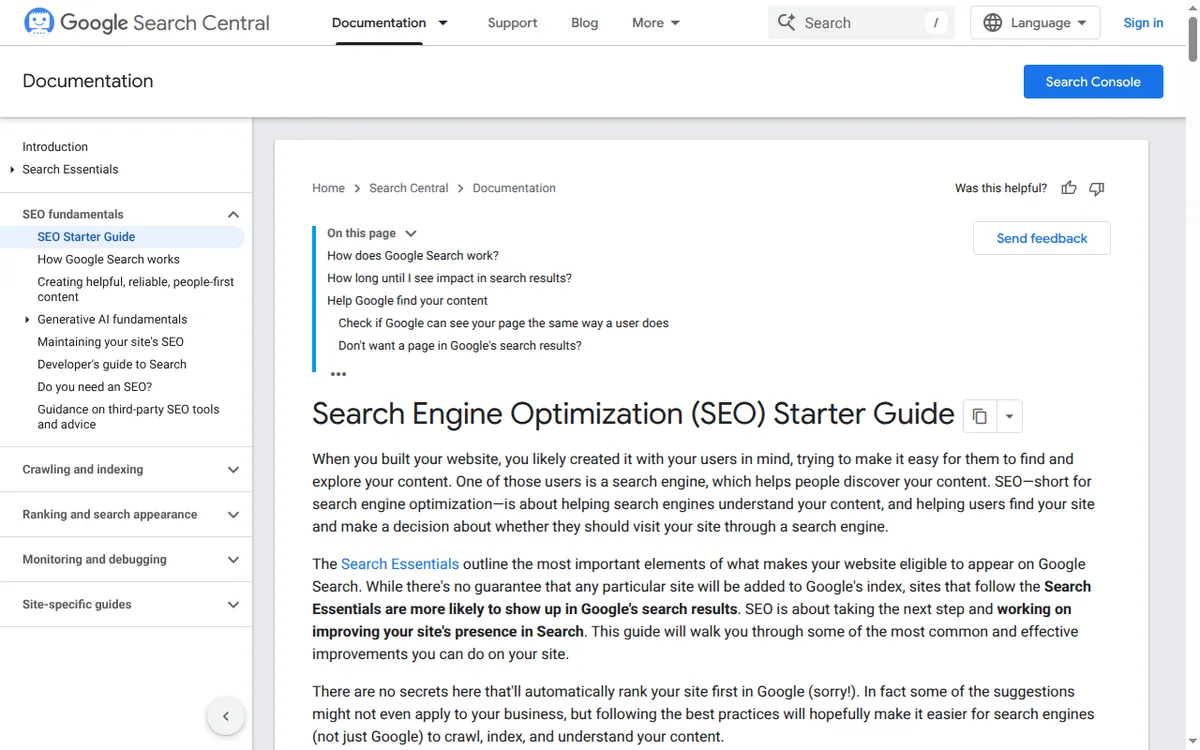
These fixes rarely improve website ranking in google search overnight, but they remove the ceilings that quietly cap every page you publish. Fix them once and they keep paying off. If you want to make this a repeatable system rather than a one-time cleanup, see how to automate SEO.
Step 5: Earn backlinks and build authority
Backlinks — links from other sites to yours — remain one of the strongest google ranking factors. They act like votes of confidence, and Google still leans on them heavily to decide who's authoritative. The catch: quality beats quantity every time. Ten links from real, relevant sites outrank a thousand spammy ones, and buying links is a good way to get penalized.
For founders with no time and no budget, here are tactics that actually work:
- Be genuinely useful publicly — answer questions on forums, communities, and social where your audience already is, and link when it truly helps.
- Create link-worthy assets — original data, a free tool, a template, or a deeply researched guide people want to cite.
- Guest posts and podcasts — trade your expertise for a byline and a link on a relevant site.
- Digital PR — a small original study or a strong opinion piece can earn mentions you'd never get from a generic post.
Be patient here. Links accumulate slowly, and a young site with a handful of quality links plus genuinely helpful content can still rank high on Google for the right long-tail terms. Authority compounds — every good link makes the next page you publish rank a little easier.
Step 6: Track rankings and iterate
SEO isn't set-and-forget. You publish, you measure, you improve. The founders who win treat it as an operating rhythm, not a one-time launch.
Watch these in Search Console: which queries you're getting impressions for, your average position, and your click-through rate. A page ranking on page two is your best opportunity — a few improvements often push it onto page one, where the traffic actually lives. Look for pages stuck at positions 8–15 and give them a refresh.
Iterating usually means one of a few moves:
- Update content that's slipped so it's current and more complete.
- Add internal links from newer posts to older ones.
- Expand a page to cover questions you missed.
- Target a new long-tail keyword you discovered in your query data.
Here's the honest part: this loop — research a keyword, draft the page, optimize it, publish, track, repeat — is simple to understand and genuinely hard to sustain when you're also shipping a product. It's repetitive, and it never really ends.
That's the gap Lunroo is built to close. It's an AI marketing platform that runs the whole workflow — keyword research, drafting in your brand voice, editing, and a steady weekly cadence — Notion-native with a draft-and-approve step, so nothing publishes without your sign-off. It won't magically rank you overnight (no tool can), but it lets you run this exact process at a steady weekly cadence without hiring. If you'd rather have the repetitive parts on autopilot while you stay in control, start with Lunroo — and see how AI agents automate marketing for the bigger picture. For pricing, check the current plan.
FAQ
How long does it take to rank on Google?
For a new or low-authority site, expect three to six months of consistent effort before you see meaningful rankings for competitive terms — sometimes longer. Long-tail keywords with low difficulty can rank faster, occasionally within weeks, especially if your page clearly matches intent. Anyone promising page one in days is selling something.
Can I rank without backlinks?
Yes, for the right keywords. Low-competition, long-tail terms can rank on the strength of genuinely helpful, well-structured content and solid on-page SEO alone. For competitive head terms, though, you'll almost always need quality backlinks, because that's a major signal Google uses to separate close contenders.
Do I need to pay to rank on Google?
No — organic rankings are free to earn, which is exactly why founders love them. You can learn how to rank on google for free using Search Console and your own effort. What costs you is time and consistency. Tools and platforms can save that time by running the workflow for you, but ranking itself isn't pay-to-play. (Google Ads is separate — that's paid placement, not organic ranking.)
How many keywords should I target per page?
Focus each page on one primary keyword and a small cluster of closely related variations. Trying to rank one page for many unrelated terms dilutes it and confuses Google about what the page is for. If you have two distinct topics, make two pages and link them together.
Does AI-generated content rank on Google?
It can, as long as it's genuinely helpful and accurate. Google rewards useful content regardless of how it's produced, but it penalizes thin, unedited, mass-produced pages made only to game rankings. The winning approach is AI drafts fast, then a human reviews claims, adds real expertise, and approves before publishing — which is why draft-and-approve workflows matter.
What's the single most important google ranking factor?
There isn't one — the google ranking algorithm weighs relevance, content quality, links, and page experience together. But if you're a founder forced to pick where to start, it's this: publish the most genuinely helpful page for a search someone actually makes. Get that right and everything else amplifies it. Get it wrong and no amount of technical polish will save you.