Programmatic SEO in 2026: How Small Teams Scale Content
Programmatic SEO is the practice of generating hundreds or thousands of pages from a single template plus a structured data source, so you can rank for long-tail search variations no team could write by hand. Done well, it turns one page design into an organic-traffic engine. Done badly, it buries your site in thin, near-duplicate pages that Google quietly de-indexes.
Here's the short version: the tactic still works in 2026, but the bar for quality has moved. This guide walks through what programmatic SEO is, when it fits, how to build an engine step by step, and — the part most guides skip — how a small marketing team keeps quality high without an SEO department behind them.
What is programmatic SEO?
Programmatic SEO (often shortened to pSEO) uses a page template and a dataset to publish many pages at once, each targeting a specific long-tail keyword pattern. Instead of writing one post about "project management software," you generate a page for every "project management software for [industry]" variation your data supports.
The mechanics are simple. You have three ingredients:
- A keyword pattern — a repeatable search shape like "[tool] integration" or "best restaurants in [city]."
- A data source — a spreadsheet, database, or API that fills the variables (cities, tools, job titles, product specs).
- A template — a page layout with slots the data drops into, plus supporting copy that makes each page genuinely useful.
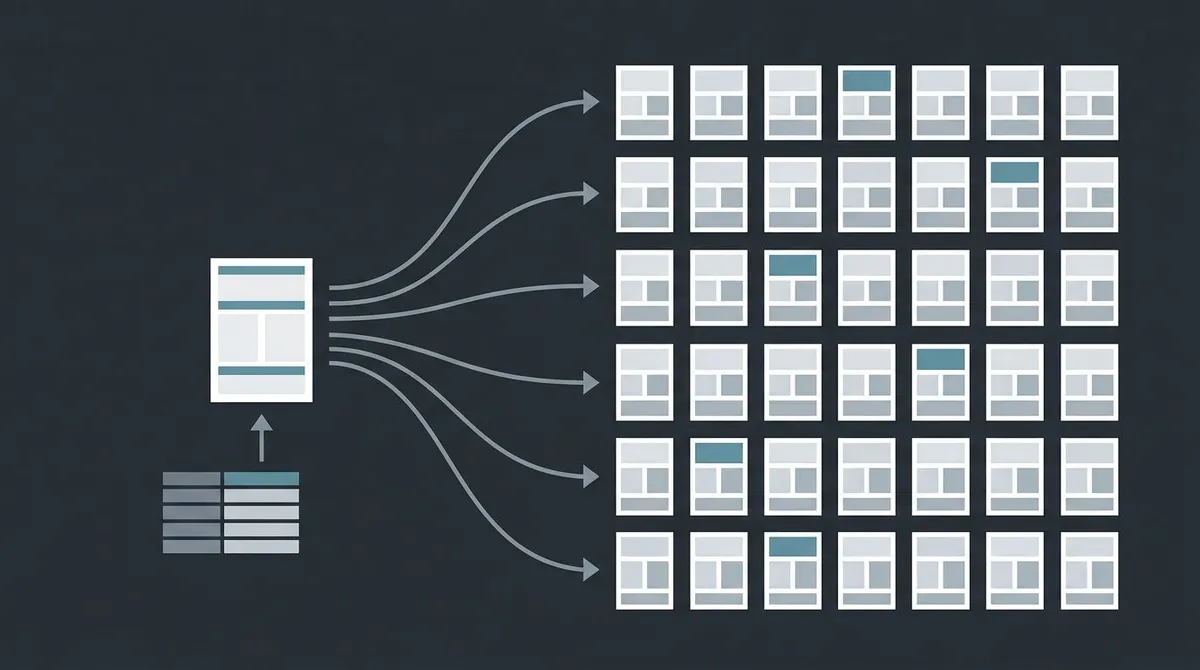
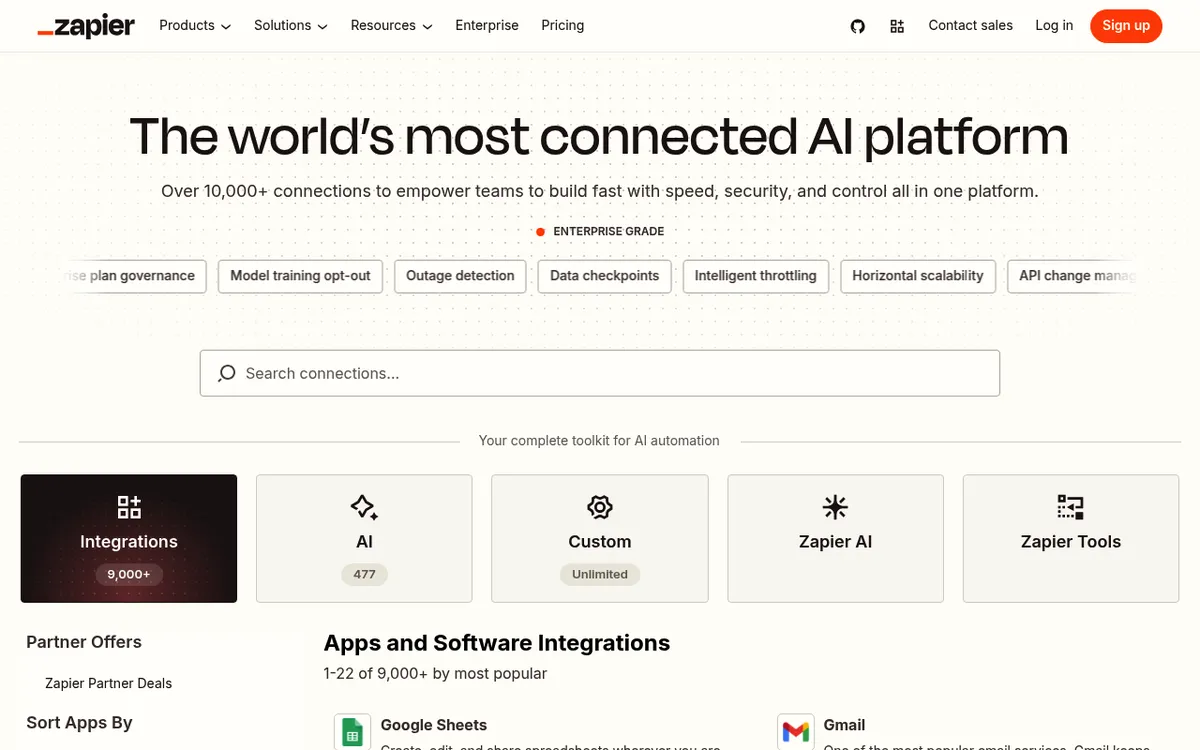
You've seen the output even if you didn't know the term. Yelp ranks for "[cuisine] in [city]" across tens of thousands of location pages. Zapier built a huge organic footprint on "[App A] + [App B] integration" pages. G2 does it with software category and comparison pages. Each page answers one narrow query well, and the volume adds up.
The appeal for a small team is leverage: design the system once, and it produces pages while you sleep. The catch is that the same leverage multiplies mistakes just as fast.
Programmatic SEO vs. traditional SEO
Traditional SEO is hand-crafted. You research a topic, write a pillar article, and earn links to it. Each page is a deliberate, high-effort asset — the kind of work covered in our guide on how to write SEO content. It's the right approach for competitive head terms and for content that needs real depth, opinion, or expertise.
Programmatic SEO trades depth for breadth. It shines in the long tail: thousands of low-competition queries that each get a handful of searches a month but collectively drive meaningful traffic. Nobody is going to hand-write 4,000 city pages, and no single page needs to be a masterpiece — it needs to answer one specific question fully.
The two approaches aren't rivals; they're layers of the same strategy. Most healthy sites run pillar content for the hard, high-intent terms and programmatic pages for the long-tail sweep. If you're mapping this out, our post on how to build a content strategy covers how the layers fit together.
The programmatic sweet spot is a query pattern with these traits: predictable search intent, a reliable data source, low keyword difficulty, and enough real variation between pages to justify each one existing.
When programmatic SEO actually works (and when it backfires)
Some page types are almost purpose-built for this approach:
- Location pages — "[service] in [city]," where local intent and real geographic data give each page a reason to exist.
- Integration pages — "[Product] + [Tool]," where each combination has a distinct use case.
- Comparison and alternatives pages — "[Tool A] vs [Tool B]," where the data (features, pricing, reviews) genuinely differs per pair.
- "X for Y" pages — "[Product] for [industry/role]," where the pain points and examples change by segment.
What these share is that the underlying data is different enough, page to page, that a reader gets a distinct answer each time. That's the whole test.
The failure mode is the mirror image. When the only thing that changes between pages is a city name swapped into otherwise-identical boilerplate, you've built thin content. Google's systems are good at spotting near-duplicate pages, and the result is index bloat: thousands of URLs competing with each other, diluting your crawl budget, and dragging down the site's overall quality signal.
Most programmatic projects that fail don't fail on the technical build. They fail because someone optimized for page count instead of page value. "We shipped 10,000 pages" is a vanity metric. "We shipped 800 pages that each answer a real question" is a traffic engine.
How to build a programmatic SEO engine: step by step
Here's the practical sequence a lean team can follow.
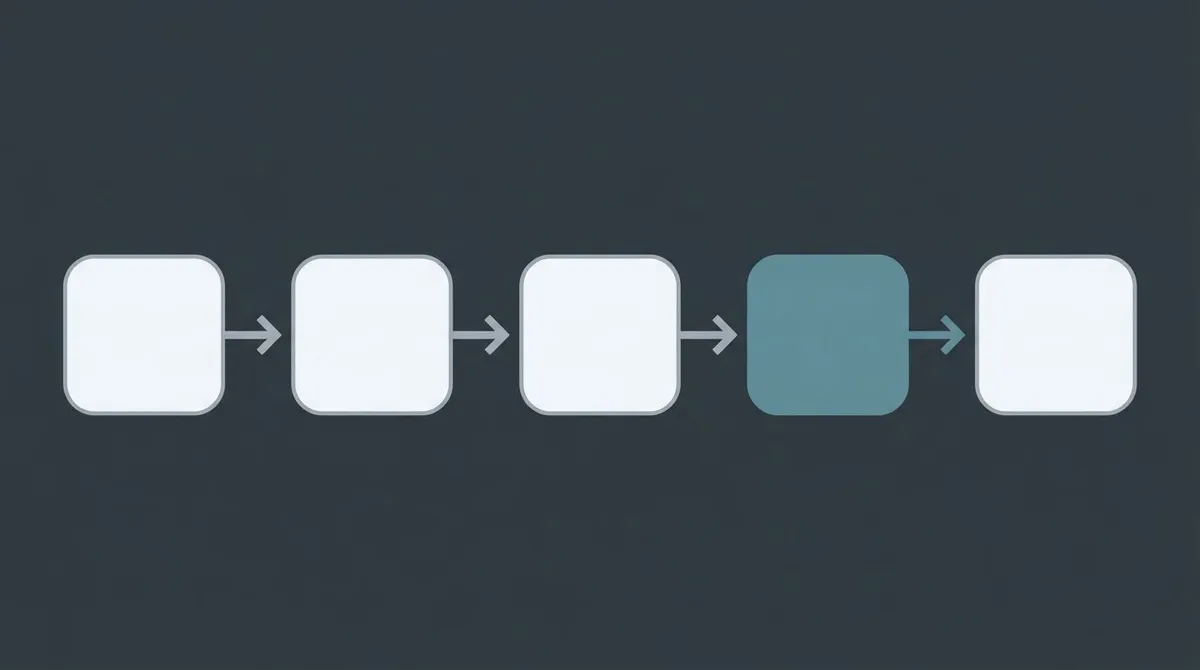
2. Secure a data source. Every page needs unique, accurate inputs. This might be a public API, a licensed dataset, your own product data, or a hand-built spreadsheet. The quality of your pages is capped by the quality of this data — garbage in, thin pages out.
3. Design the template. Build a layout with dynamic slots for the data plus static sections that add genuine value: a clear intro that matches intent, a useful comparison table or data visualization, an FAQ, relevant context. The template is where you decide whether each page will be helpful or hollow.
4. Automate internal linking. Orphan pages don't rank. Wire your template so related pages link to each other automatically — city pages to nearby cities, integration pages to the parent product, comparison pages to both competitors. This distributes authority and helps Google discover the set.
5. QA before you publish. This is the step that separates engines from graveyards. Spot-check pages for accuracy, readability, and duplicate copy. Confirm each page clears a "would a human find this useful?" bar. Then publish in controlled batches, not all at once, so you can watch indexation and catch problems early.
That last step is non-negotiable in 2026, which is where the quality problem comes in.
The quality problem: avoiding Google's thin-content penalties
Google's helpful content system rewards content made for people and demotes content made mainly to game rankings. Programmatic SEO sits right on that fault line — it can be either, and the template alone doesn't decide which.
The practical guidance is straightforward, per Google Search Central's helpful content documentation: each page should provide substantial, unique value; demonstrate real experience or expertise (E-E-A-T); and satisfy the searcher so they don't bounce back to the results. A page that only reshuffles the same sentences with a variable swapped fails all three.
So the defensible move is to build quality in per page, not bolt it on afterward:
- Unique value on every page — real data, specific examples, genuine differences, not just a find-and-replace on the intro.
- Match intent precisely — an integration page and a comparison page want different things; give each the format its searcher expects.
- Add human judgment — a person should review claims, catch data errors, and kill pages that don't clear the bar before they ship.
This is why "generate 10,000 pages" is the wrong goal. The number that matters is how many of your pages a human would thank you for landing on. Scale is only an asset when quality rides along with it. The same principle applies to any AI-assisted SEO content — automation handles volume, but a human still owns the standard.
Programmatic SEO for small marketing teams: doing it without a full SEO department
Big brands run programmatic SEO with dedicated engineers and SEO specialists. Most small teams don't have that. If you're a two-person marketing team or a solo founder, the honest question isn't "can I generate pages?" — plenty of tools do that — it's "can I keep 500 pages accurate and useful without a department watching them?"
The realistic path is to split the work by what's repetitive and what needs judgment. Data collection, template population, internal linking, and indexation monitoring are repetitive — automate them hard. Intent matching, fact-checking, and the go/no-go call on each batch need a human — protect those.
This is exactly the division a multi-stage content workflow is built for, and it's how we designed Lunroo. Rather than one prompt box, Lunroo runs the pipeline as distinct stages: Research finds keyword patterns and pulls the data, Drafting produces page copy that's actually worth reading, Editing checks quality and intent match, and Publishing sequences the run. You can read more about how AI agents automate marketing if you want the mechanics.
The part that matters for programmatic SEO specifically is the control layer. Every batch lands in draft mode for a human to approve before anything publishes — scale without surrendering editorial judgment. And because it's Notion-native, your team reviews drafts in the tool they already plan in, not yet another dashboard. That's the difference between a firehose of pages and a controlled, reviewable pipeline.
Tools and approaches compared
Programmatic SEO tooling falls into a few categories, and the right pick depends on how much control and quality assurance you need. Here's an honest look at the landscape.
| Approach | Best for | Quality control | Notes |
|---|---|---|---|
| Lunroo (automated content workflow) | Small teams who need scale and editorial control | Draft-and-approve on every batch; distinct research, drafting, editing and publishing stages | Notion-native; research → draft → edit → approve as one loop. See pricing |
| No-code page builders (Webflow + a CMS, Airtable-driven sites) | Teams comfortable wiring data to templates themselves | Manual — you own every QA step | Flexible and powerful, but the quality process is entirely on you |
| AI content platforms (Outrank, RankPill, Byword) | Fast bulk article generation | Varies; often volume-first | Genuinely quick at turning keywords into pages; lighter on coordinated review by default |
| Custom-built engines | Engineering-heavy teams with specific needs | Whatever you build in | Maximum control, maximum dev cost — usually overkill for a small team |
Each of these has real strengths. No-code builders give you total design control. Dedicated AI content tools like Outrank and RankPill are legitimately fast at turning a keyword list into published articles — if raw throughput is your bottleneck, they deliver. Where Lunroo differs is scope and control: the whole content pipeline runs on autopilot across research, writing, and editing, with a human approval gate built into the workflow rather than added on. If you're weighing options in this space, our roundup of AI SEO tools goes deeper on the tradeoffs.
If you'd rather see the human-in-the-loop approach in action — an end-to-end content workflow that scales pages while keeping every batch genuinely useful and under your sign-off — start with Lunroo.
FAQ
Is programmatic SEO still worth it in 2026?
Yes, when the pages are genuinely useful. The tactic itself isn't dead — Google still ranks well-built programmatic pages that serve real intent. What's changed is that the helpful content system raised the floor. Thin, templated pages that would have coasted a few years ago now get demoted or de-indexed. If your data is rich and each page earns its place, programmatic SEO remains one of the highest-leverage ways to grow organic traffic.
Does Google penalize programmatic pages?
Google doesn't penalize pages for being generated programmatically. It demotes pages that are unhelpful, thin, or made mainly to manipulate rankings — regardless of how they were created. A hand-written thin page and a generated thin page get the same treatment. The line isn't automation; it's value. Pages with unique data, clear intent match, and real usefulness are fine.
How many pages do I need?
Fewer than you think, and quality beats quantity every time. There's no magic number — it depends on how many real long-tail variations your data supports. It's far better to publish 300 pages that each answer a distinct question than 5,000 near-duplicates. Start with a focused batch, confirm they index and rank, then expand the pattern. Let genuine search demand set the ceiling, not your ambition.
Do I need to code?
Not necessarily. No-code tools like Webflow paired with a data source, or Airtable-driven site builders, let you run programmatic SEO without engineering. AI content platforms and workflow automation tools go further and handle the generation for you. Coding gives you more control for complex or high-volume setups, but a small team can launch a solid programmatic project without writing a line.
What's the difference between programmatic SEO and AI content spam?
Intent and quality control. Both can produce pages at scale, but programmatic SEO done right starts from real search demand, uses accurate data, and puts a human review step before publishing. AI content spam skips that — it mass-produces pages to game rankings with no regard for whether anyone benefits. The output can look similar; the difference is whether each page is built to help a specific searcher. That human approval gate is what keeps scaled content on the right side of the line.